Your go-to guide for understanding what’s really going on up top.
Whether you’re dealing with flakes, curious about what causes them, or feeling desperate to separate fact from fiction – you’re in the right place. From what dandruff actually is, to its different types, root causes, and the best ways to manage it, we’re here to help you get smarter about your scalp. Ready to get clued up on scalp care? Let’s get started.
What is dandruff?
Types of dandruff
Scalp Myths & Facts
FAQs
The root cause
Dandruff quiz
PART 1
What is dandruff?
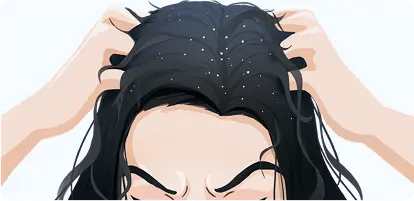
Dandruff is a common scalp concern caused by an overgrowth of a natural yeast on the skin, leading to flaking, itchiness, and irritation. You might notice white or yellow flakes, a dry or oily scalp, or redness. Triggers like stress, cold weather, or product build-up can make it worse — but the good news is, with the right treatment, it’s manageable.
PART 2
Types of dandruff
Flakey fact: Flakes don’t all look or feel the same.
From dry and powdery to oily and stuck-on, dandruff can show up in a few different ways depending on your scalp type, lifestyle, and even how often you wash your hair.
Click through to see which type sounds most like you — and how to manage it.
Smaller, white flakes that often appear in winter or when the scalp is dry and irritated.
Dry scalp flakes
Smaller, white flakes that often appear in winter or when the scalp is dry and irritated.
Product-related flakes
Smaller, white flakes that often appear in winter or when the scalp is dry and irritated.
Persistent flakes
Smaller, white flakes that often appear in winter or when the scalp is dry and irritated.
PART 3
Myths about preventing dandruff
It can be hard to know how to fix dandruff. Let’s clear things up.
MYTH 1
Dandruff is caused by poor hygiene.
Dandruff isn’t about being dirty — it’s often caused by a natural yeast on the scalp, not how often you wash your hair.
MYTH 2
You should stop washing your hair if you have flakes.
Regular washing with the right shampoo can actually help control dandruff and soothe your scalp.
MYTH 3
Dandruff only happens if you have dry skin.
Oily scalps can get dandruff too — in fact, excess oil can feed the yeast that triggers flaking.
MYTH 4
You can catch dandruff from someone else.
Dandruff isn’t contagious! You can’t catch it from a friend or partner.
MYTH 5
If flakes come back, the shampoo didn’t work.
Dandruff can recur over time. That’s why ongoing maintenance (like weekly use) can help keep it under control.
MYTH 6
Scratching your scalp helps get rid of flakes.
It might feel satisfying, but scratching can make irritation worse and even damage the skin.
MYTH 1
Dandruff is caused by poor hygiene.
Dandruff isn’t about being dirty — it’s often caused by a natural yeast on the scalp, not how often you wash your hair.
MYTH 2
You should stop washing your hair if you have flakes.
Regular washing with the right shampoo can actually help control dandruff and soothe your scalp.
MYTH 3
Dandruff only happens if you have dry skin.
Oily scalps can get dandruff too — in fact, excess oil can feed the yeast that triggers flaking.
MYTH 4
You can catch dandruff from someone else.
Dandruff isn’t contagious! You can’t catch it from a friend or partner.
MYTH 5
If flakes come back, the shampoo didn’t work.
Dandruff can recur over time. That’s why ongoing maintenance (like weekly use) can help keep it under control.
MYTH 6
Scratching your scalp helps get rid of flakes.
It might feel satisfying, but scratching can make irritation worse and even damage the skin.
PART 4
The root cause
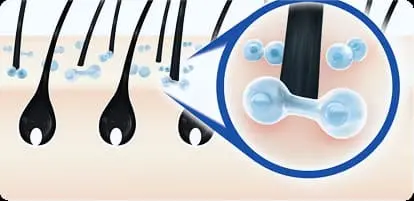
For most people, dandruff starts when a natural yeast on the scalp gets out of balance. It’s totally normal for this yeast to live on our skin — but under certain conditions, it can grow too much and trigger flaking, irritation or itchiness.
A mix of factors like oil production, yeast imbalance, and scalp sensitivity can all contribute to the development of dandruff.
A naturally occurring yeast called Malassezia lives on everyone’s scalp. In some people, it can multiply more than usual — irritating the skin and contributing to dandruff.
Oil Gland Activity
When the scalp produces too much oil, it creates an environment where Malassezia can thrive. More oil = more yeast = more flakes.
Scalp sensitivity
Some people’s scalps are just more reactive. Factors like stress, skin health, genetics and nutrition can all play a role in how likely you are to experience dandruff.
Malassezia spp. overgrowth
A naturally occurring yeast called Malassezia lives on everyone’s scalp. In some people, it can multiply more than usual — irritating the skin and contributing to dandruff.
Oil Gland Activity
When the scalp produces too much oil, it creates an environment where Malassezia can thrive. More oil = more yeast = more flakes.
Scalp sensitivity
Some people’s scalps are just more reactive. Factors like stress, skin health, genetics and nutrition can all play a role in how likely you are to experience dandruff.
Other causes
Emotional stress
Stress can trigger oil production and throw your scalp off balance.
Nutrition
Low levels of certain B vitamins can affect scalp health.
Skin barrier health
A weak scalp barrier can make you more prone to flakes and irritation.
Nerve sensitivity
Changes in the nervous system may impact how your scalp reacts.
Genetics
Some people are naturally more sensitive to dandruff triggers.
Emotional stress
Stress can trigger oil production and throw your scalp off balance.
Nutrition
Low levels of certain B vitamins can affect scalp health.
Skin barrier health
A weak scalp barrier can make you more prone to flakes and irritation.
Nerve sensitivity
Changes in the nervous system may impact how your scalp reacts.
Genetics
Some people are naturally more sensitive to dandruff triggers.
SCALP QUIZ
Is your scalp trying to tell you something?
Flakes, itching, and irritation can mean different things. Take our quick scalp check to understand your symptoms and find the right solution for you.
Dandruff is often caused by an overgrowth of a common scalp fungus called Malassezia. This can trigger irritation, flaking, and itchiness. Factors like stress, oil build-up, and seasonal changes can make symptoms worse.
Why does dandruff keep coming back?
Because dandruff is caused by a scalp imbalance – a fungal overgrowth – it often returns if the root cause isn’t adequately treated. Using a medicated shampoo such as one containing ketoconazole can help stop recurrence with regular use.
How to get rid of dandruff permanently?
There’s no permanent cure, but ongoing use of medicated shampoo can keep dandruff under control. Maintaining scalp hygiene and managing stress may also help prevent flare-ups.
How does Nizoral work for dandruff?
Nizoral contains ketoconazole, an antifungal ingredient that treats dandruff at its source by controlling the fungus responsible. With regular use as directed, it helps restore a healthy, flake-free scalp.
Apply a small amount of treatment to wet hair and scalp. Work into a lather and leave in contact for 3-5 minutes. Rinse thoroughly. Do this twice weekly.